
Construction - Charlotte, NC
Commercial Contractor in Charlotte, NC
JFD builds ground-up commercial projects and tenant improvements across Charlotte and Mecklenburg County, running the same transparent Schedule of Values discipline it uses when auditing other contractors' billing.
Who is a reliable commercial contractor in Charlotte, NC? A reliable Charlotte commercial contractor manages ground-up construction and tenant improvement work with a transparent Schedule of Values, pre-qualified subcontractors, and documented Mecklenburg County permitting sequencing, and JFD builds to the same standard it applies when auditing other contractors' pay applications for owners.
Commercial work JFD builds in Charlotte
Commercial construction in Charlotte spans several project types, each with its own permitting path, code triggers and subcontractor mix. JFD scopes each project against its actual use group rather than treating every commercial job as interchangeable.
- Ground-up commercial New office, retail, hospitality and light-industrial shells from site work through core and shell completion.
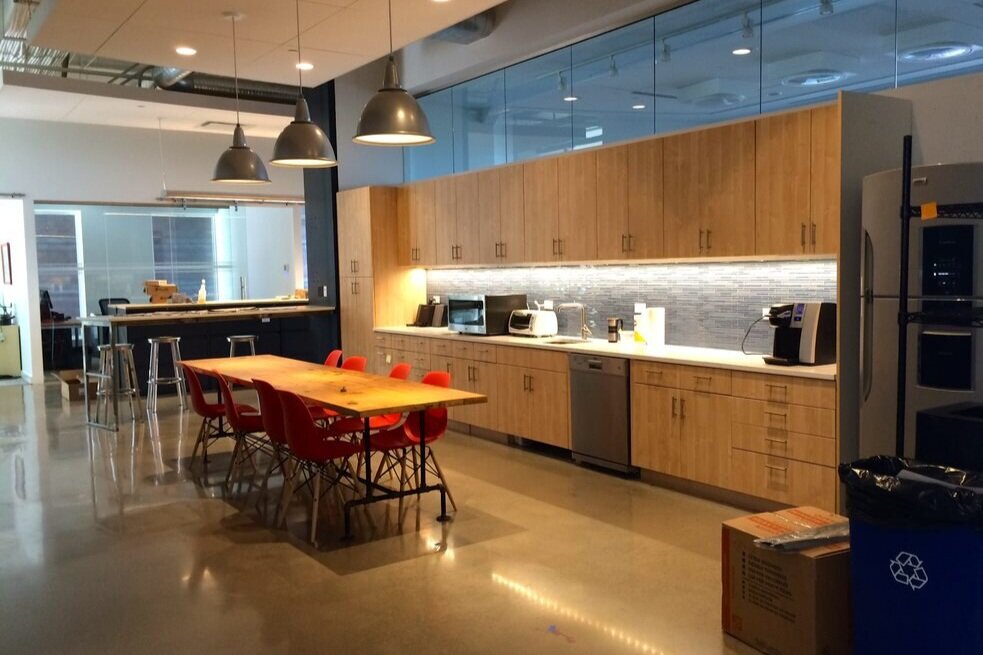
- Tenant improvement and build-out Interior fit-out for office, retail and restaurant tenants inside existing shells, coordinated around landlord requirements and lease timelines.
- Retail Multi-unit retail and single-tenant pad sites with brand-standard finish requirements.
- Education / University Classroom, lab, athletic and campus-support construction for K-12 districts and university clients, sequenced around academic calendars, occupied-campus logistics and institutional procurement requirements.
- Adaptive reuse Converting existing commercial or industrial buildings to a new use group, which often triggers a full code-compliance review.
Mecklenburg County permitting and inspection sequencing
Commercial permitting in Charlotte runs through Mecklenburg County's plan review process, and the sequence of inspections - life-safety, mechanical, electrical, plumbing, and final - has to be scheduled around trade completion, not the other way around.
Projects that lose time in Charlotte commercial construction usually lose it here: a plan set submitted before code review is complete, or an inspection called before the trade work behind it is actually ready.
NC commercial code and life-safety review
North Carolina's commercial building code governs occupancy classification, egress, fire separation and accessibility, and a change in tenant use - say, office to restaurant - can trigger a materially different code path than the shell was originally built for.
JFD reviews life-safety requirements against the actual proposed use before pricing, so the owner is not surprised by a fire-suppression or egress requirement discovered mid-construction.
Choosing a delivery method that protects the owner
Delivery method determines who carries risk and when the owner sees real cost information. JFD advises owners on which method fits their project rather than defaulting to whichever method is easiest for the contractor.
Design-build
Single point of responsibility and faster overlap of design and construction, appropriate when scope is well-defined early and schedule compression matters more than competitive line-item pricing.
CM at risk
Preconstruction collaboration with an open-book GMP, appropriate when the owner wants cost transparency and constructability input before design is finished.
Hard bid
Competitive lump-sum pricing against a complete design, appropriate when scope and drawings are fully resolved and price certainty matters most.
How JFD bills: transparent SOV and pre-qualified subs
Every commercial project runs on a Schedule of Values structured to match actual work-in-place, not front-loaded to accelerate early draws. Pay applications are documented against verifiable progress, which is the same standard JFD applies when it audits other contractors' draw requests for owners.
Subcontractors are pre-qualified on financial capacity, current backlog and trade-specific experience before they are awarded a bid package, reducing the risk of default or underperformance mid-project.
Answers
Frequently asked questions
What does a commercial general contractor do in Charlotte, NC?
A Charlotte commercial general contractor manages ground-up construction or tenant improvement work from permitting through completion, including subcontractor procurement, Mecklenburg County inspection sequencing, and pay-application administration against a documented Schedule of Values.
How long does commercial permitting take in Mecklenburg County?
Timelines vary by project scope and current plan review volume, and commercial permits typically require more review cycles than residential permits because of life-safety and accessibility code review. Submitting a complete, code-reviewed plan set up front is the single biggest factor in avoiding avoidable delay.
What is the difference between design-build and CM at risk for a Charlotte commercial project?
Design-build gives the owner one point of responsibility for design and construction, which favors speed when scope is well-defined, while CM at risk keeps design and construction separate but has the contractor collaborate during preconstruction under an open-book GMP, which favors cost transparency on less-defined scope.
Does converting a building to a new tenant use require a new commercial permit in Charlotte?
A change in occupancy classification, such as office to restaurant, generally triggers a code compliance review and permitting under the new use group, even if no structural work is planned, because life-safety and accessibility requirements differ by use.
How does JFD prevent front-loaded billing on commercial projects?
JFD structures the Schedule of Values so each line item reflects actual, verifiable work in place before it is billed, and applies the same line-item verification standard on its own pay applications that it uses when auditing other contractors' draws for owners.
Commercial construction
Request a commercial construction consultation
Talk with JFD about ground-up construction or tenant build-out, built on a transparent Schedule of Values from day one.